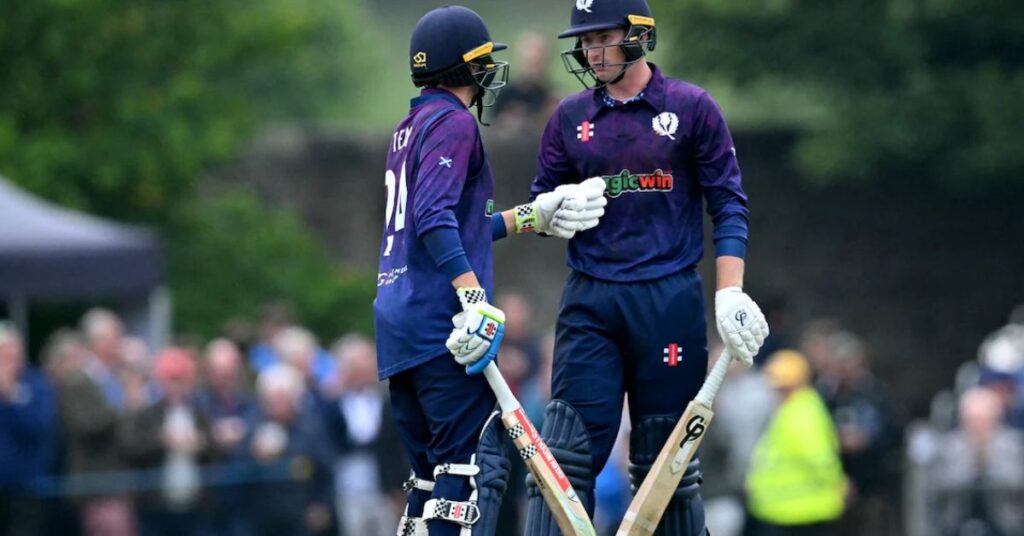

Amid an unfolding T20 World Cup 2026 participation controversy involving Bangladesh, the spotlight has shifted to Scotland’s reaction to reports that they could step in as a replacement side if Bangladesh were to withdraw from the tournament. The situation has created significant uncertainty in international cricket circles, with potential implications not only for Group C of the World Cup but also for the overall integrity and scheduling of the event.
Although the International Cricket Council (ICC) has not held formal talks with Scotland about replacing Bangladesh, Scotland’s response — or rather its restraint — reflects a cautious and respectful stance amid the wider dispute. Here’s a detailed, SEO-optimised look at all sides of this developing story, including Scotland’s official position, the backdrop of Bangladesh’s T20 World Cup dilemma, what it would mean if Scotland were called up, and the broader cricketing implications.
What Scotland Has Said — and What It Hasn’t
Reports swirling around the cricket world recently suggested Scotland could replace Bangladesh at the 2026 T20 World Cup if the Bangladesh Cricket Board (BCB) decides not to play matches in India. However, according to the latest update, Scotland has not been contacted by the ICC regarding this matter and has not engaged in formal discussions about replacing Bangladesh. The governing body has confirmed no talks with Cricket Scotland have taken place as of now.
When asked about the possibility, Scotland has declined to comment directly on the speculation, maintaining a neutral position and avoiding public pressure while the situation unfolds.
Why the Talk of Scotland Arises
The reason Scotland’s name has come up is rooted in the current standoff between Bangladesh and the ICC over Bangladesh’s T20 World Cup participation — specifically whether they will travel to India for some of their scheduled matches. There have been reports that the BCB has pushed back against playing in India and has requested venue changes.
International media outlets and ranking assessments have suggested that Scotland, as the highest-ranked team not currently qualified for the tournament, would be in line to replace Bangladesh if they were to withdraw.
But those reports remain preliminary, and neither the ICC nor Cricket Scotland has confirmed any concrete negotiations.
The Bangladesh T20 World Cup Controversy
To understand Scotland’s reaction, it helps to examine why this situation arose in the first place:
- The controversy began after Bangladesh’s reluctance to play matches scheduled in India, citing security and logistical concerns.
- Reports emerged of the BCB wanting matches relocated to Sri Lanka, but the ICC reportedly declined to amend the tournament schedule.
- Various Indian media outlets and cricket insiders suggested that Scotland could be named as a replacement team if Bangladesh ultimately chose not to participate.
- The provisional deadline for Bangladesh’s decision was reported to be January 21, as pressure mounted on all sides to finalise arrangements due to the proximity of the tournament’s start.
The standoff has also impacted preparations in other countries. For example, reports indicate the Pakistan Cricket Board paused its T20 World Cup planning in solidarity or uncertainty over Bangladesh’s participation, demonstrating how widespread the effects have become.
What Scotland’s Potential Inclusion Would Mean
If Scotland were to be invited into the T20 World Cup due to Bangladesh’s absence, it would be a major moment for Scottish cricket:
1. Historic World Cup Opportunity
Scotland would be among a limited number of Associate-level sides to compete on cricket’s biggest limited-overs stage, offering exposure, experience, and the chance to compete with elite Full Member teams.
2. Rankings and Qualification Impact
Their inclusion would be based on T20I rankings — a testament to sustained performance outside of World Cup qualification tournaments — and could encourage other Associate teams in future qualification debates.
3. Impact on Group Dynamics
Bangladesh’s absence and Scotland’s entry would redraw competitive assumptions in Group C, where teams like England, West Indies, Nepal, and Italy are scheduled to play, potentially affecting match outcomes and playoff pathways.
Why Scotland Has Been Cautious
Scotland’s quiet reaction is notable for several reasons:
- No official approach from the ICC yet — confirmed statements stress that cricket’s global governing body has not reached out regarding replacement discussions.
- Avoiding premature celebration or politicisation — publicly embracing the idea before it is official could be seen as unsporting or disrespectful toward Bangladesh, whose participation is still under negotiation.
- Respecting process and diplomacy — Scotland’s restraint suggests a preference for letting formal channels play out before making definitive public statements.
Rather than reacting hastily, Scotland appears to be waiting for clarity from the ICC and final outcomes from BCB negotiations.
Broader Cricket Governance Implications
This controversy has raised questions about how the ICC manages sensitive situations involving host nations, security concerns, and team participation:
- Security and player welfare — Boards have a duty to ensure the safety of their players, and when concerns are raised, they must be taken seriously and investigated thoroughly.
- Tournament integrity — Replacing a Full Member team with a non-qualified side is unprecedented at this scale and raises logistical and ethical considerations.
- Diplomacy in sport — Cricket boards must balance national sentiment, bilateral relations, and tournament commitments — a challenge that is playing out in real time.
The ICC’s eventual resolution of this issue could set precedents for future tournaments involving multi-host arrangements.
What’s Next?
As of now:
- The ICC and BCB continue to negotiate, including discussions about venue changes and participation conditions.
- Scotland has not been formally contacted by the ICC about stepping in as a replacement.
- A final decision on Bangladesh’s status is expected imminently, with the tournament due to begin in early February.
For Scotland, the best course appears to be staying prepared without making assumptions, balancing optimism with realism until official confirmation arrives.
Conclusion
The speculation around Scotland potentially replacing Bangladesh at the T20 World Cup 2026 reflects one of the most unusual pre-tournament controversies in recent cricket history. While the idea of Scotland stepping in has gained traction in media reports, official sources confirm there have been no formal discussions with Cricket Scotland yet, and their reaction has been quiet and cautious amid the broader controversy.
As the deadline for Bangladesh’s decision approaches, global cricket fans will be watching closely. Whether Scotland ultimately participates or not, this episode underscores the complex interplay between sports governance, national boards, and international competition logistics — and highlights how unpredictable major tournaments can become even before a single ball is bowled.