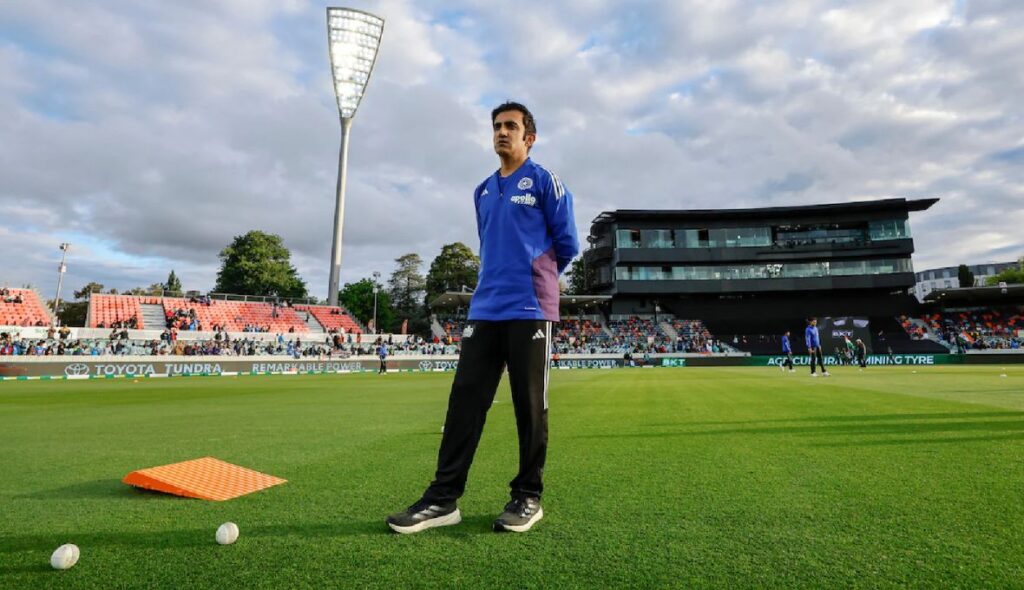

Indian cricket is once again at the center of a heated debate after a former Indian batter made a strong statement regarding the future of Gautam Gambhir as the head coach of the Indian men’s team. The ex-cricketer claimed that if Gambhir fails to guide India to victory in the T20 World Cup, the Board of Control for Cricket in India (BCCI) should take a “big decision”, even suggesting that the coach should be sacked.
The comment has triggered widespread discussion among fans, former players, analysts, and media outlets. With Gautam Gambhir having taken over the coaching role amid high expectations, opinions are sharply divided on whether success in a single tournament should determine his future or whether Indian cricket needs a more patient, long-term approach.
This blog explores the statement in detail, the context behind it, Gambhir’s coaching journey so far, India’s T20 World Cup expectations, and whether such high-pressure demands are fair in modern international cricket.
The Statement That Sparked the Debate
The remark—“If Gautam Gambhir fails to win the T20 World Cup, then the BCCI should take a big decision”—came from a former Indian batter during a discussion on India’s recent performances and future prospects. The comment was blunt, leaving little room for interpretation.
According to the ex-player:
- The Indian team has enough talent to win global tournaments
- Coaching standards must match India’s resources
- Failure at the T20 World Cup should have consequences
Such statements resonate strongly with a section of fans who believe that results must outweigh reputation, regardless of a coach’s past achievements as a player.
Gautam Gambhir: From Match-Winner to Head Coach
Gautam Gambhir is one of India’s most respected former cricketers. Known for his mental toughness and match-winning performances, Gambhir played a crucial role in:
- 2007 T20 World Cup final
- 2011 ODI World Cup final
These moments have cemented his legacy as a big-match player, and naturally, expectations have followed him into his coaching career.
Gambhir’s Coaching Philosophy
Since taking charge, Gambhir has emphasized:
- Fearless cricket
- Aggressive intent
- Clear roles for players
- Mental toughness in pressure situations
Supporters argue that his mindset is exactly what Indian cricket needs to overcome its recent struggles in ICC knockout matches.
Why Expectations Are Sky-High for the T20 World Cup
India enters every T20 World Cup as one of the favorites. With a deep talent pool, a strong domestic system, and the IPL serving as a global benchmark, anything less than a title often feels like failure.
India’s Recent T20 World Cup History
Despite consistent performances, India has:
- Failed to win a T20 World Cup since 2007
- Fallen short in semifinals and finals
- Struggled in pressure knockout games
These repeated near-misses have increased frustration among fans and former players alike, leading to calls for accountability at the coaching and management level.
The Ex-Indian Batter’s Perspective: Results Over Reputation
The former batter’s argument is straightforward:
- Coaches are hired to deliver results
- Indian cricket has waited long enough
- Sentiment should not override performance
According to this viewpoint, Gambhir was appointed with a clear mandate—to win major ICC trophies. Failure to do so, especially in a format India prioritizes, should prompt the BCCI to reassess its decision.
This school of thought believes that no individual should be bigger than the system, regardless of past heroics.
Is One Tournament Enough to Judge a Coach?
This is where opinions sharply diverge.
Arguments Supporting the Sacking Call
- Clear Goal Was Set
- Winning the T20 World Cup is a primary objective
- India Has the Resources
- Player depth, infrastructure, and analytics support success
- Previous Coaches Faced Similar Pressure
- Past coaching tenures were judged harshly on ICC results
- Accountability at the Top
- Leadership must be held responsible for outcomes
Supporters of this view argue that repeated patience has not delivered results.
Arguments Against Judging Gambhir Too Early
On the other hand, many believe the call is premature and unfair.
- Coaching Is a Long-Term Process
- Building culture and consistency takes time
- Cricket Is a Team Sport
- One coach cannot control on-field execution
- Knockout Matches Are Unpredictable
- A single bad day can undo months of preparation
- Frequent Changes Create Instability
- Constantly changing coaches disrupts team continuity
Former cricketers and analysts have often pointed out that successful teams back their leadership even after setbacks.
BCCI’s Track Record With Coaches
The BCCI has historically taken strong decisions when it comes to team management.
Past Examples
- Coaches have been replaced after ICC disappointments
- Selection committees have been overhauled
- Leadership groups have been reshuffled frequently
This history suggests that the BCCI does not shy away from bold moves if results don’t meet expectations.
However, critics argue that such instability has sometimes harmed long-term planning.
Pressure on Indian Coaches: A Unique Challenge
Coaching the Indian cricket team is unlike any other role in world sport.
Why the Pressure Is Extreme
- Massive fan base
- Intense media scrutiny
- Commercial expectations
- Constant comparison with past greats
A single loss can dominate headlines for weeks, while wins are quickly taken for granted.
Gautam Gambhir stepped into this environment knowing the risks, but even seasoned professionals can find the pressure overwhelming.
Players’ Role in World Cup Success
One key counter-argument to the sacking call is that players must also be held accountable.
- Dropped catches
- Poor shot selection
- Bowling under pressure
These are on-field issues beyond a coach’s direct control. Critics of the ex-batter’s statement argue that blaming the coach alone oversimplifies the problem.
What Gambhir Has Changed So Far
Supporters of Gambhir highlight some positives:
- Clear communication with players
- Backing youngsters
- Emphasis on intent over conservatism
- Reducing fear of failure
They argue that judging these changes solely on one tournament outcome would be short-sighted.
Fan Reactions: A Divided Nation
Social media reactions reflect a deeply divided fan base.
Supporters of the Statement Say:
- Enough excuses have been made
- India needs ruthless decision-making
- Winning matters more than process
Opponents Argue:
- Gambhir deserves time
- Knee-jerk reactions hurt Indian cricket
- Stability is key to long-term success
The debate continues to trend across platforms whenever India’s coaching future is discussed.
The Hypothetical Scenario: India Fall Short Again
If India fails to win the T20 World Cup:
- Pressure on the BCCI will intensify
- Media criticism will escalate
- Calls for change will grow louder
In such a scenario, the BCCI will have to balance:
- Public sentiment
- Long-term planning
- Performance metrics
Whether that leads to Gambhir’s exit remains uncertain.
The Bigger Question: What Does Success Look Like?
Is success defined only by lifting the trophy, or does it include:
- Reaching finals consistently?
- Developing future leaders?
- Building a fearless team culture?
Many cricketing nations now focus on sustained competitiveness, not just single-tournament outcomes.
Expert Opinions on Coaching Stability
Several former international coaches have emphasized:
- Trusting the process
- Allowing leadership groups to mature
- Avoiding panic-driven decisions
They warn that frequent changes can create a cycle of short-term thinking, ultimately hurting performance.
BCCI’s Dilemma: Results vs Continuity
The BCCI faces a classic dilemma:
- Act decisively to satisfy expectations
- Or back the coach for long-term stability
Both approaches carry risks, and the board’s decision will shape Indian cricket’s direction for years.
What Lies Ahead for Gautam Gambhir
For Gambhir, the path is clear but challenging:
- Deliver strong performances
- Handle pressure calmly
- Unite players behind a common vision
The T20 World Cup will be a defining chapter in his coaching career.
Simple FAQs (SEO-Friendly)
Who called for Gautam Gambhir’s sacking?
A former Indian batter suggested that the BCCI should take a big decision if Gambhir fails to win the T20 World Cup.
Is Gautam Gambhir’s job under threat?
There is no official statement, but public debate has intensified.
Has Gambhir won any ICC trophy as coach?
His coaching tenure is still ongoing, and results are yet to be fully judged.
Does the BCCI sack coaches based on one tournament?
Historically, the BCCI has taken strong decisions after ICC events, but outcomes vary.
Conclusion
The statement—“If Gautam Gambhir fails to win the T20 World Cup, the BCCI should take a big decision”—captures the high-stakes nature of Indian cricket. It reflects the impatience of fans and former players who crave global success, but it also raises important questions about fairness, stability, and long-term vision.
While results matter, cricket remains an unpredictable sport where success cannot always be guaranteed. Whether the BCCI chooses a results-driven or process-driven approach will determine not just Gambhir’s future, but the direction of Indian cricket itself.
For now, all eyes remain on the T20 World Cup—where performance, pressure, and perception will collide once again.